Situations
What if… situations at the water in Poland: inspection, undersized fish, limit, forgotten documents
- Reading
- 12 min
- Questions
- 30
- Sources
- 8
- As of
- 25 Nov 2026
Most questions arise at the water when something happens that you did not expect: an undersized fish, an inspection by the warden, a forgotten licence, a goby on the hook. Here are the situations with answers based on the Polish inland fisheries act and its regulation, with the section and a note on whether it is a regulation, the rules of the water or practical advice.
Three rules cover most situations
Memorise them before the others
What you must not keep
If a fish caught during the protection period, under the minimum size, over the limit or in breach of nature conservation legislation is alive, release it immediately and carefully into the same fishing water (Art. 9, para. 1 of the Act).
Licence and permit
Anyone who has a fishing licence (karta wędkarska) may angle, and on water used by someone, also that user's permit (zezwolenie) (art. 7 ust. 2 of the ustawa). The permit may be on paper or electronic (Art. 7, para. 2a).
Permit conditions
Limits, daily fishing hours and the catch register are set by the user of the water in the permit and its rules. Breaching them is an offence (art. 27a ust. 1 pkt 2 of the ustawa).
Four situations step by step
These are decided quickly, so they are broken down into steps
The fishery warden checks you at the water
- Stop fishing and listen to what the warden wants. The State Fishing Guard (Państwowa Straż Rybacka) may check the documents entitling anyone who is fishing (art. 22 ust. 2 and art. 23 pkt 1 of the ustawa).
- Ask the warden to show identification, especially if they are a member of the Social Fishing Guard (Społeczna Straż Rybacka), which has only part of the powers of the State Guard (art. 24 and 25 of the ustawa). This is practical advice.
- Show your licence and permit, on paper or on your phone (art. 7 ust. 2a of the ustawa), and the catch register if the permit requires one.
- Expect that in case of an offence the State Guard may fine you on the spot (art. 23 pkt 6 of the ustawa), usually up to PLN 500 (art. 96 § 1 of the Kodeks postępowania w sprawach o wykroczenia).
- If you disagree with the procedure, do not argue on the bank. Note the warden's name, the time and the place and resolve the matter afterwards, in writing (advice from practice).
art. 7, 22 to 25 of the ustawa o rybactwie śródlądowym. The tips on how to proceed are practical advice.
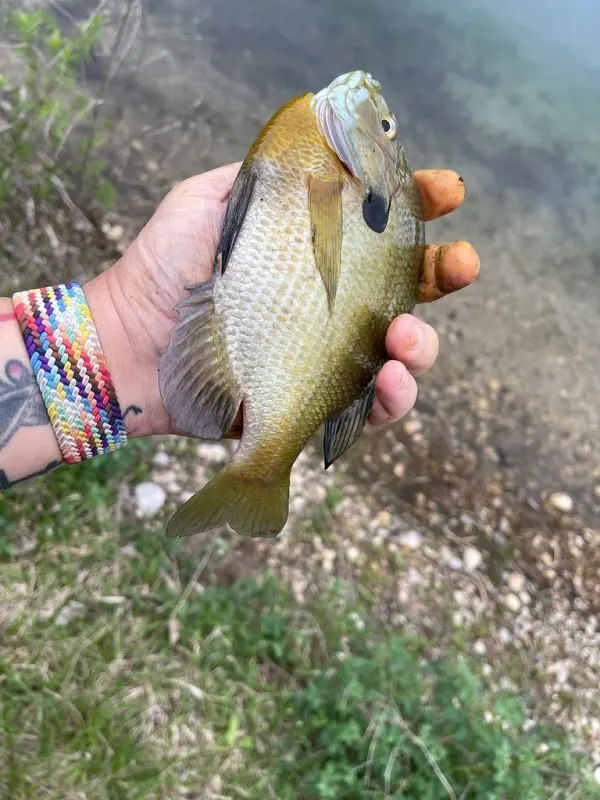
You caught a fish you may not keep (under size, during the close season)
- Do not keep the fish out of the water longer than necessary. A longer fight and handling increase mortality (review by Bartholomew and Bohnsack 2005).
- If you want to measure the fish, do it quickly on a wet surface or on a measuring tape. It is measured from the front of the closed mouth to the end of the longest ray of the tail fin (§ 6 ust. 2 of the rozporządzenie).
- Remove the hook quickly with wet hands or pliers. If it is swallowed deeply, cut the line as close to the hook as possible.
- If the fish is alive, release it immediately and gently into the same fishing ground (art. 9 ust. 1 of the ustawa). Hold it head upstream and let it swim away by itself (practical advice).
art. 9 ust. 1 of the ustawa, § 6 and § 7 of the rozporządzenie; Bartholomew and Bohnsack 2005 (study). The advice on handling fish is from practice.
You have reached the limit of your permit
- Find out which limit applies. The regulation sets a daily limit only for eel: 2 fish (§ 2 ust. 3 of the rozporządzenie). Other limits in numbers and kilograms, per day, week and year, are in the permit and the rules of the water.
- Example: in 2026 the PZW okręg Bielsko-Biała allows zander and pike together 2 a day, carp and tench together 2 a day and other species together 5 kg a day (rules).
- If another fish over the limit is alive, release it immediately into the same fishing ground (art. 9 ust. 1 of the ustawa).
- If the permit requires a catch register, record the catch as instructed by the user of the water. Not keeping the register is an offence (art. 27a ust. 1 pkt 2 of the ustawa).
§ 2 ust. 3 of the rozporządzenie, art. 9 and 27a of the ustawa, rules of the PZW okręgi. Limits vary by regional branch and change every year.
You forgot your licence or permit
- Left your licence at home? Do not start fishing. Fishing without carrying the licence is an offence (art. 27a ust. 1 pkt 2 lit. a of the ustawa). A foreigner staying in Poland temporarily does not need a licence if they have a permit (art. 7 ust. 4).
- Have your permit on your phone? The Act allows permits in paper or electronic form (Art. 7, para. 2a of the Act). Wody Polskie sends the permit as a PDF with a QR code.
- Have no permit at all? Buy one before you start fishing. On Wody Polskie waters it has been sold only online via WIR since January 2026; on PZW waters from the okręg that manages the water.
art. 7 and art. 27a of the ustawa. For offences under art. 27a the fine is PLN 20 to 5,000 (art. 24 § 1 of the Kodeks wykroczeń).
How to work with these answers
What is regulation and what is advice from practice
With every answer we give the section if the matter is governed by the Act or the Decree. Advice on how to handle a fish comes from angling practice or from a study, and we say so where it does. Sources and levels of evidence are explained in the guide Sources and methodology.
RegulationUstawa o rybactwie śródlądowym (consolidated text of 2022 with the amendment in force from 18 Mar 2026) and the rozporządzenie of 12 Jul 2023, as of 25 Nov 2026. Examples from the rules of the PZW okręgi Bielsko-Biała and Gorzów for 2026.
Frequently asked questions
30 questions with short answers. Expand the one you are interested in.Questions30
What if I catch a fish below the minimum size in Poland?
If it is alive, release it immediately and gently into the same fishing ground (art. 9 ust. 1 of the ustawa). Minimum sizes are in § 6 of the rozporządzenie, for example pike and zander 45 cm, wels catfish 70 cm, eel 50 cm. It is measured from the front of the closed mouth to the end of the longest ray of the tail fin (§ 6 ust. 2).
Handle the fish for as short a time as possible, because the mortality of released fish rises with the length of the fight and the handling (Bartholomew and Bohnsack 2005). The table of sizes is in the guide The fishing law.
What if I catch a fish in its protection period?
If it is alive, release it immediately and gently into the same fishing ground (art. 9 ust. 1 of the ustawa). Poland has no close season for all fish by water type; individual species are protected during their protection period (§ 7 of the rozporządzenie), for example pike 1 Jan – 30 Apr, zander and grayling 1 Mar – 31 May
Fishing in the protection period is an offence punishable by restriction of liberty or a fine of at least PLN 200 (art. 27b ust. 1 of the ustawa).
What if I catch a goby, a bullhead catfish or another non-native species?
You must kill a non-native fish or crayfish immediately and must not release it into the fishing ground where you caught it or into any other water (§ 8 of the rozporządzenie). The regulation names, for example, the round goby, topmouth gudgeon, black and brown bullhead, Amur sleeper and the signal and spiny-cheek crayfish. The list is only illustrative.
What if a fish swallows the hook deeply?
Cut the line as close to the hook as possible and release the fish. A review of 53 studies reports higher mortality with deep hooking and when removing deeply swallowed hooks (Bartholomew and Bohnsack 2005). The recommendation to cut the line is our conclusion from this finding, not a quotation from the review.
What if the fish is exactly at the minimum size?
Measure from the front of the closed mouth to the end of the longest ray of the tail fin (§ 6 ust. 2 of the rozporządzenie), on a flat surface. The regulation gives no tolerance, so release a fish just below the size. If the rules for your water set a higher minimum size or a maximum size, the rules apply.
What if I catch a big zander or pike above the maximum size?
The regulation sets no maximum size, but the rules of the water may. For example, in 2026 the PZW okręg Bielsko-Biała allows you to keep zander and pike only between 50 and 80 cm, the okręg Gorzów between 50 and 85 cm. If a fish outside this range is alive, release it immediately (art. 9 ust. 1 of the ustawa).
What if my limit in Poland is full?
The regulation sets a daily limit only for eel: 2 fish (§ 2 ust. 3 of the rozporządzenie). Other limits are set by the user of the water in its rules and the permit. If a fish over the limit is alive, release it immediately into the same fishing ground (art. 9 ust. 1 of the ustawa).
Exceeding a limit set in the rules of the water is a breach of the permit conditions (art. 27a ust. 1 pkt 2 lit. b of the ustawa).
What if I forget my fishing licence at home?
Not fished. Fishing without carrying the licence is an offence punishable by a fine or a reprimand (art. 27a ust. 1 pkt 2 lit. a of the ustawa). Exempt are children under 14 supervised by an adult with a licence (art. 7 ust. 3) and foreigners staying in Poland temporarily who have a permit (art. 7 ust. 4).
What if I only have the permit on my phone, is that valid?
Yes. The Act allows permits in paper or electronic form (Art. 7, para. 2a of the Act). Wody Polskie sends the permit as a PDF with a QR code.
What if the permit requires a catch register and I do not keep it?
Not keeping a catch register (rejestr połowu) although the permit requires it is an offence punishable by a fine or a reprimand (art. 27a ust. 1 pkt 2 of the ustawa). How the register is kept is set by the user of the water in the permit.
What if the fishery warden checks me at the water?
Stop fishing and show your licence and permit. The State Fishing Guard may check the documents entitling anyone who is fishing (art. 22 ust. 2 and art. 23 pkt 1 of the ustawa), and may also impose a fine on the spot (art. 23 pkt 6).
Step by step it is set out higher up on this page.
What if I risk a fine?
For offences under art. 27a of the ustawa (licence, permit, permit conditions) the fine is PLN 20 to 5,000 or a reprimand (art. 24 § 1 of the Kodeks wykroczeń). Fishing during the protection period, under the minimum size, over the limit or with more rods than allowed is punishable by restriction of liberty or a fine of at least PLN 200 (Art. 27b, para. 1). A court may withdraw the licence permanently or deposit it for at least 12 months (art. 27a ust. 4). We did not find the appeal procedure in the sources we read.
What if I lose my karta wędkarska?
We did not find the procedure for a replacement licence in the sources we read. The licence is issued by the starosta responsible for your place of residence (art. 7 ust. 5 of the ustawa), so contact that office. Until you have a licence, you must not fish, except for the exemptions for children and foreigners.
What if the water where I want to fish is not on my permit?
A permit is issued by the user of the water for its waters (art. 7 ust. 2 of the ustawa). For another water buy a permit from its user: on Wody Polskie waters online via WIR, on PZW waters from the okręg that manages the water. Prices are in the guide How to become an angler.
What if the rules of the water differ from the regulation?
The rules of the water may set stricter sizes, longer protection periods, limits, the number of rods and daily fishing hours. If the rules and the regulation differ, follow the stricter rule and ask the okręg or the user of the water.
What if I want to fish at night in Poland?
The regulations do not set daily fishing hours; they only prohibit artificial light for finding and attracting fish (§ 2, para. 2, point 1 of the Regulation). The hours are set by the holder of the fishing rights. In 2026, the PZW Bielsko-Biała and Gorzów branches allow fishing all day, except on trout and grayling zone waters (from 1 hour before sunrise to 1 hour after sunset) and for ice fishing (prohibited at night). Young people under 16 only under supervision at night.
What if I want to fish through the ice?
The regulation allows ice fishing and sets the tackle for it: a rod of at least 30 cm and at the end of the line 1 hook with at most 3 points within a circle of 20 mm diameter, or an artificial lure with at most 2 such hooks (§ 2 ust. 4 of the rozporządzenie). The PZW okręgi Bielsko-Biała and Gorzów ban ice fishing at night in 2026. Judge for yourself whether the ice is safe; the regulation does not deal with it.
What if I want to fish near a weir or a dam?
Fishing is prohibited closer than 50 m to structures and installations that impound water (Art. 8, para. 1, point 4 of the Act). Rod fishing is also prohibited closer than 50 m to nets set by the holder of the fishing rights and to spawning grounds marked by them.
What if I want to fish from a boat?
The regulation we read does not specifically regulate fishing from a boat. The rules for fishing from a boat are in the rules of the water. Read them before fishing.
What if I want to fish with live bait fish?
The regulations do not prohibit live baitfish; you may catch baitfish with a lift net at the fishing spot and may release them only into the same water (Art. 7, paras. 1 and 1a of the Act). The regional branches' rules may restrict it: for example, in 2026 the Bielsko-Biała branch prohibits it from 1 Jan to 31 May, and under the RAPR children under 14 may not fish with live or dead baitfish.
What if the voivodeship has declared a fishing ban?
In places and at times set by resolution of the voivodeship board (zarząd województwa), a complete or partial ban on amateur fishing applies (Art. 17, para. 3, point 2 and para. 7 of the Act). Fishing there at that time is an offence under art. 27b of the ustawa.
What if a child wants to fish in Poland?
Children under 14 do not need a licence, but may fish only under the supervision of an adult who has one (art. 7 ust. 3 of the ustawa). The licence is issued from the age of 14. According to the PZW RAPR, children under 14 must not fish with live or dead bait fish, and young people under 16 may fish at night only under supervision.
What if I am from Slovakia or another country?
A foreigner staying in Poland temporarily does not need a licence if they have a permit from the user of the water (art. 7 ust. 4 of the ustawa). You always need a permit. On Wody Polskie waters you buy it online via WIR, on PZW waters from the okręg. We have not verified how a foreign national buys a permit in the PZW system.
What if I want to fish at a commercial fishery?
You do not need a licence if you fish in waters of a fish breeding or rearing facility and have a permit from its user (art. 7 ust. 4 of the ustawa). The conditions and price are set by the user.
What if I catch a crayfish?
The noble crayfish and the narrow-clawed crayfish must not be taken by recreational anglers (art. 2 ust. 1 of the ustawa), and catching them without authorisation is a criminal offence (art. 27c ust. 1 pkt 1). Non-native crayfish, for example the signal, spiny-cheek, red swamp and marbled crayfish, must be killed immediately and must not be released (§ 8 of the rozporządzenie).
What if I catch a protected species?
Fishing is also prohibited in cases laid down by nature conservation legislation (Art. 8, para. 1, point 1 of the Act). Protected species include, for example, the stone loach, spined loaches, weatherfish, sunbleak, Carpathian barbel, ziege, bullheads and lampreys. If you catch such a fish, release it immediately and carefully (Art. 9, para. 1 of the Act).
What if I cannot identify the species of fish?
If you do not know the species, release the fish. The close season, minimum size and limit depend on the species, so you cannot judge it correctly. The fish catalogue with descriptions and pictures will help.
What if I hook myself in the hand or finger?
Do not pull the hook out by force, especially if it has a barb, and stop fishing. If the hook is deeper or has a barb, see a doctor, who will also check your tetanus vaccination status. This is general safety advice from practice, not data from a regulation or from a study we read.
What if a thunderstorm breaks out at the water?
Stop fishing, put the rod down and move away from the water and from open ground. A long rod over your head is a risk in lightning. This is general advice from practice. We did not look for exact thunderstorm safety rules in the angling sources.
What if I see a poacher or water pollution?
For an ongoing offence, danger or a threat to life call the emergency number 112. Also inform the user of the water or the State Fishing Guard. If fish die, note the time and place and take photographs. Apart from crayfish (art. 27c of the ustawa), we have not checked the criminal consequences of poaching.
No question was found for this search.
Related guides
Where to go next once you have read thisGuides3
- Fishing law in PolandProtection periods, minimum sizes, number of rods, eel limit, prohibited fishing methods and PZW rules, section by section.
- How to become an angler in PolandKarta wędkarska, exam, permit from PZW or Wody Polskie and what an angler from Slovakia needs.
- Fishing basicsGear, three techniques and a checklist for your first day at the water in Poland.
Sources
Each source shows the level of evidence and the date we opened it.Sources8
- Inland Fisheries Act of 18 April 1985 (ustawa o rybactwie śródlądowym; consolidated text, Dz. U. of 2022, item 883) Dziennik Ustaw (Journal of Laws), ELI (eli.gov.pl). Opened 20 Nov 2026. Consolidated text (tekst jednolity) from the announcement of the Marshal of the Sejm of 23 Mar 2022. Provisions used: Art. 1, 4, 6, 7, 7a, 8, 9, 13, 17, 21 to 25, 27a and 27b (karta wędkarska, zezwolenie, exemptions for children and foreign nationals, fishing bans, number of rods, distances, fishery wardens, offences).Regulation
- Ustawa o rybactwie śródlądowym – tekst ujednolicony (printed on 21 Apr 2026) Kancelaria Sejmu, ISAP. Opened 20 Nov 2026. A consolidated version for information only, incorporating all amendments (“opracowano na podstawie: t.j. Dz. U. z 2022 r. poz. 883, 1795”); it is not the official text. We compared Art. 7, paras. 2 to 4 and Art. 27a, para. 1, point 2; they are the same as in the consolidated text (tekst jednolity) of 2022.Official source
- Regulation of the Minister of Agriculture and Rural Development of 12 July 2023 on detailed conditions for the protection and catching of fish in inland surface waters (Dz. U. of 2023, item 1373) Dziennik Ustaw (Journal of Laws), ELI (eli.gov.pl). Opened 20 Nov 2026. Published on 19 Jul 2023, in force from 27 Jul 2023. Provisions used: § 1, 2 (rod, light, ice fishing, eel limit, lift net), § 4 and 5 (exam, licence fee PLN 10), § 6 (minimum sizes and measuring), § 7 (protection periods), § 8 (non-native species), § 16 to 18. We also checked the values from § 6 and 7 against the published PDF: https://eli.gov.pl/eli/DU/2023/1373/ogl/pol/pdfRegulation
- Regulamin Amatorskiego Połowu Ryb (resolution No. 172/IX/2019 of the PZW Main Board (Zarząd Główny) of 20 Sep 2019, in force from 1 Jan 2020) Polski Związek Wędkarski (a copy on the website of the PZW regional branch in Zielona Góra). Opened 20 Nov 2026. The union's framework rules: fishing conditions are set by the permit of the PZW regional board (Zarząd Okręgu), which may tighten or relax minimum sizes and protection periods; children under 14 only under supervision and without fishing with live or dead baitfish; young people under 16 only under supervision at night. It contains no numerical limits or sizes. We have not verified whether the ZG PZW has adopted a newer version.Official source
- Regulamin amatorskiego połowu ryb Okręgu PZW Bielsko-Biała (in force from 1 Jan 2026) Okręg Polskiego Związku Wędkarskiego w Bielsku-Białej. Opened 20 Nov 2026. Example of a regional branch's regulamin: two rods (only one on trout and grayling zone waters), fishing all day except on trout and grayling zone waters (from 1 hour before sunrise to 1 hour after sunset), zander and pike 2 fish combined per day, carp and tench 2 combined, trout and grayling 2 per day, 4 per week, 20 per year, other species 5 kg; zander and pike 50 to 80 cm, eel from 60 cm; live and dead baitfish prohibited 1 Jan – 31 May; huchen may not be kept. In the point on protection periods for other species, it still refers to the repealed regulation from 2001.Official source
- Regulamin amatorskiego połowu ryb 2026 – Okręg PZW w Gorzowie Wielkopolskim Okręg Polskiego Związku Wędkarskiego w Gorzowie Wielkopolskim. Opened 20 Nov 2026. Second example of a regional branch's regulamin (as at 1 Jan 2026): on trout and grayling zone waters, fishing from 1 hour before sunrise to 1 hour after sunset, spinning and fly fishing only; elsewhere fishing all day, under the ice not at night; zander and pike may be kept only from 50 to 85 cm (pike on mountain rivers from 45 cm), eel from 60 cm; zander protected 1 Jan – 31 May (stricter than the regulations); daily limits by species, for example carp 2, wels catfish 1, eel 2. The resolution number is not given in the text.Official source
- Kup zezwolenie na wędkowanie online – nowa funkcja w Wirtualnym Informatorze Rzecznym (18 Dec 2025) Państwowe Gospodarstwo Wodne Wody Polskie. Opened 20 Nov 2026. In the fishing areas (obwody rybackie) that Wody Polskie manages itself, since January 2026 the zezwolenie has been sold only electronically at wir.wody.gov.pl or in the WIR app (even without an account), with payment by bank transfer or BLIK; the zezwolenie arrives by email as a PDF with a QR code.Official source
- Bartholomew A., Bohnsack J. A. (2005): A review of catch-and-release angling mortality with implications for no-take reserves. Reviews in Fish Biology and Fisheries 15: 129–154 Springer. Opened 6 Nov 2026. A review of 274 estimates from 53 studies: median mortality 11%, mean 18%, range 0 to 95%. Mortality is higher with deep hooking, natural bait, removing deeply swallowed hooks, J-hooks, warm water and long fights or handling.Study