Fish, catfish family
Wels catfish
- Maximum length
- 292cm
- Maximum weight
- 135kg
- Best water temperature
- 18–28 °C
- Water today (4.2 °C)
- Tolerates it, but slowed down
- Fishing districts near where it occurs
- 5
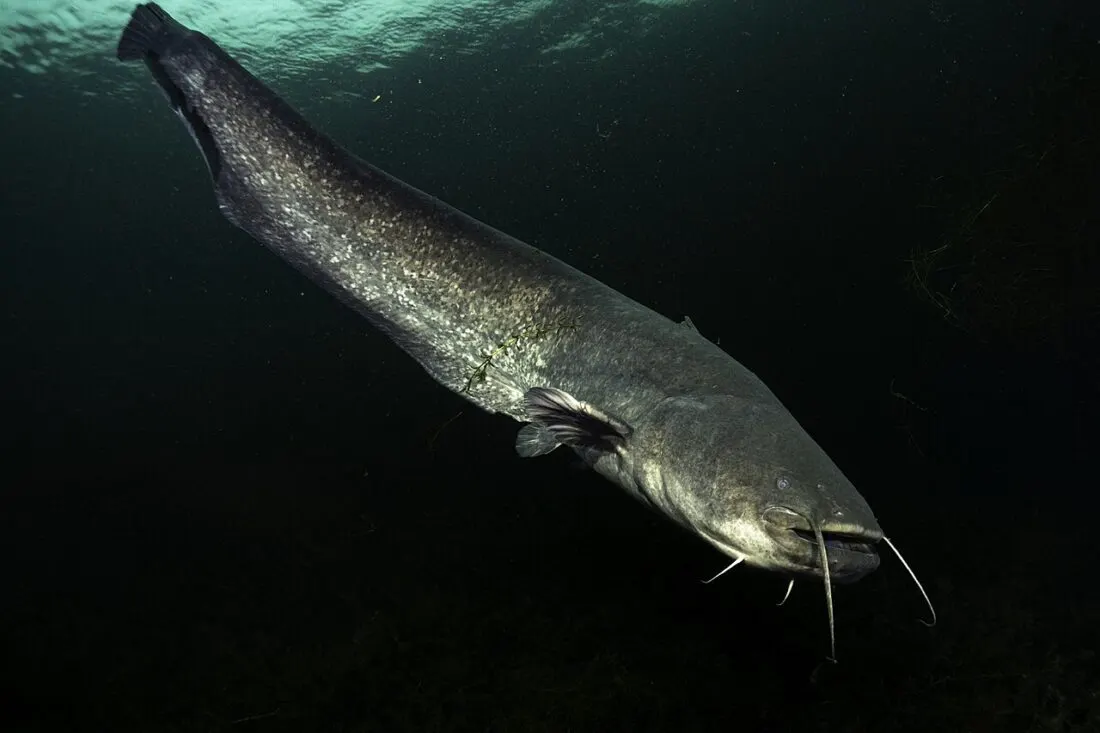
Wels catfish: the species and fishing rules
About the species Wels catfish
Length up to292 cmWeight up to135 kg
How to recognise it
Huge, scaleless, with a broad head, six barbels (two long ones on the upper jaw) and a very long anal fin.
Where it lives
Deep pools of large lowland rivers (Danube, Váh, Morava) and large reservoirs.
What it feeds on
Fish, crayfish, frogs and waterbirds.
Spawning
In May and June; the male guards the nest in the shallows.
It is the largest freshwater fish in Europe. Fishing for it requires strong gear and is often done at night.
Close season, minimum size and daily limit
What the Fisheries Act says about wels catfish. For guidance only; check it in the fishing regulations of the fishing district.Minimum size70 cm
Protection period
- 1 Jan – 31 May § 7, para. 1, point 12 of the Regulation
this species may not be fishedoutside this period
Minimum size
70 cm
below the minimum size: return it to the waterat or above the minimum size: you may keep it
Summary of the regulations (Dz. U. of 2022, item 883 (consolidated text), amendments Dz. U. of 2025, item 1795 and Dz. U. of 2023, item 1373). It may be out of date or contain an error. The permit and the fishing regulations of the fishing district are binding. The fishing law, rule by rule.
Water, occurrence and catches
Water temperature and requirements
At what temperature the species is active and how well today's water suits it.Best temperature18–28 °CWater today4,2 °C
Tolerates it, but slowed downTypical water in Poland is 4.2 °C today. The species tolerates this temperature (4 to 30 °C), but the water is colder than the ideal 18 to 28 °C. Fish tend to be slower and pickier.
- tolerates 4 to 30 °C
- best 18 to 28 °C
- spawning at 18 to 22 °C
- typical water today 4.2 °C
- Length
- up to 292 cm
- Weight
- up to 135 kg
- Oxygen
- Typical oxygen requirements
- Position in the food chain
- 4.4predator
The values are indicative and come from the FishBase database. In a particular water, fish behave according to the weather, air pressure, oxygen and food.
Data source: FishBase (Froese & Pauly, Eds.), www.fishbase.se, version 06/2026, licence CC BY-NC.
Where it was recorded
Fishing districts around which a record of this species exists (GBIF).Fishing districts5Basins2
Occurrence by river basin
- Oder basin3from 850
- Vistula basin2from 895
Number of fishing districts with a record of the species and the number of all fishing districts in the basin.
By water type
- Flowing waters5100%
The water type determines the close season and the fishing rules of the fishing district.
Fishing districts with a record
- Obwód rybacki rzeki Odra – nr 3
- Obwód rybacki rzeki Odra – nr 4
- Obwód rybacki rzeki Kurzyca – nr 1
- Obwód rybacki RZEKI WISŁA – NR 3
- Obwód rybacki rzeki Dłubnia – nr 1
5 fishing districts in total. Show on map
Catches of Wels catfish
Approved catches by anglers on this portal.
Nobody has logged a catch of this species yet. Be the first; once approved it will appear here and on the leaderboard.

In the kitchen and in Europe
Fish in the kitchen
How it tastes, whether it has small bones and how it is cooked.
Flesh
White, meaty flesh without small bones. Younger catfish taste better, big ones tend to be fatty.
Cooking
- Frying
- Stew
- Grilling
Escalopes, fish goulash or paprikash, grilled. The skin is best removed.
Small bones
No small bonesLarge predatory fish such as pike can contain more methylmercury in their flesh. The European Food Safety Authority (EFSA) advises women planning a pregnancy, pregnant and breastfeeding women and young children to eat a variety of fish species and not to favour predatory fish.
Trade names in the EU
The names under which this species is sold in other EU countries.Countries10
- SlovakiaSumec veľký
- CzechiaSumec velký
- AustriaWallerWeller
- Hungaryharcsaszürke harcsa
- PolandSum europejski
- GermanyWelsWaller
- RomaniaSomn
- ItalySiluro
- Francesilure-glanesilure
- SpainSiluro
- IrelandWels catfish
Source: European Commission, commercial designations of fishery and aquaculture products. The names apply when the fish is sold in that country.
Frequently asked questions
Short answers from the data on this page.Questions6
Where does the wels catfish live?
Deep pools of large lowland rivers (Danube, Váh, Morava) and large reservoirs.
What does the wels catfish eat?
Fish, crayfish, frogs and waterbirds.
When does the wels catfish spawn?
In May and June; the male guards the nest in the shallows.
What water temperature does the wels catfish need?
It does best in water at 18 to 28 °C.
Does the wels catfish have small bones?
It has no small Y-shaped bones.
How is the wels catfish cooked?
Escalopes, fish goulash or paprikash, grilled. The skin is best removed.
Photo credits
- Wels catfish: Photo: HalbsHännile, CC BY-SA 4.0, Wikimedia Commons
- European eel: Photo: vranken martin, CC BY 4.0, Wikimedia Commons
Minimum sizes, protection periods and permitted fishing methods are set by the fishing regulations and the conditions of the specific fishing district. Check them before you fish.