Fishing district boundaries: Fishing area (obwód rybacki) in the official KZGW list, RZGW Szczecin. The usage agreement is valid from 7 Apr 2020 to 7 Apr 2030.
Fishing district Obwód rybacki rzeki Radew – nr 3 at a glance
Obwód rybacki rzeki Radew – nr 3 is a flowing-water fishing district. It belongs to the watercourse Radew.
By the water today
Is it worth going today? Conditions score, which species are biting today, the best window of the day, weather, pressure, sun, moon and solunar windowsBest windowWater–
Conditions at fishing district Obwód rybacki rzeki Radew – nr 3 are calculated from the weather right at the water, water temperature, light and air pressure.
By the water now
Fishing conditionsFish activity indexOur calculation (0–100): the base is set by water temperature, adjusted by light, turbidity, oxygen, weather and other factors according to how well they are supported by studies. For each factor you can see the confidence and the source. A planning aid, not a bite forecast.
The score, the best window of the day and what pushes it up or down
Fishing conditions
Fish activity indexOur calculation (0–100): the base is set by water temperature, adjusted by light, turbidity, oxygen, weather and other factors according to how well they are supported by studies. For each factor you can see the confidence and the source. A planning aid, not a bite forecast.Loading data…
Weather and forecast for fishing district Obwód rybacki rzeki Radew – nr 3
Hour by hour, pressure and the next few days
Weather and forecast
Loading data…
Sky: sun, moon and solunar windowsSolunar periodsCalculated from the position of the Moon: major periods (about 2 h) around the Moon's passage above and below the horizon, minor periods (about 1 h) around moonrise and moonset. A scientifically unconfirmed theory: in a study of 361 fishing trips (Quigley et al. 2023) it did not predict bites. We treat it as a hypothesis with a weight of at most ±2 points.
Where the sun and moon are right now and when the best windows of the day will come
Sky: sun and moon
Solunar periodsCalculated from the position of the Moon: major periods (about 2 h) around the Moon's passage above and below the horizon, minor periods (about 1 h) around moonrise and moonset. A scientifically unconfirmed theory: in a study of 361 fishing trips (Quigley et al. 2023) it did not predict bites. We treat it as a hypothesis with a weight of at most ±2 points.Drag along the axis to see where the sun and moon will be.
- Sun
- Moon
- Golden hour
- Major period
- Minor period
Sun
- Dawn07:01
- Sunrise07:42
- Sunset15:42
- Dusk16:23
The day lasts 7 h 59 min.
MoonMoon phaseAt full and new moon the gravitational effect is strongest. On a clear full-moon night predators and carp often feed at night, and the day after may be weaker.
- Moonrise16:44
- Moonset10:31
Full moon around 24 Dec, new moon around 9 Dec.
Windows of the daySolunar periodsCalculated from the position of the Moon: major periods (about 2 h) around the Moon's passage above and below the horizon, minor periods (about 1 h) around moonrise and moonset. A scientifically unconfirmed theory: in a study of 361 fishing trips (Quigley et al. 2023) it did not predict bites. We treat it as a hypothesis with a weight of at most ±2 points.
- Major solunar period00:03–02:03
- Golden hour (morning)07:12–08:42
- Minor solunar period10:01–11:01
- Major solunar period12:36–14:36
- Golden hour (evening)14:42–16:12
- Minor solunar period16:14–17:14
Solunar theory is not scientifically confirmed; we treat it as a supplement. The golden hour is the time around sunrise and sunset, when fish often bite.
Rules and permits
Am I allowed to fish here? Close seasons, fishing hours, size limits, daily limit, permit price, where to buy it, contacts and the managerWater typeFlowing water
Fishing district Obwód rybacki rzeki Radew – nr 3 is on flowing water.
Law and fishing rules at fishing district Obwód rybacki rzeki Radew – nr 3
Close season, fishing hours, minimum sizes and daily limit. For guidance only: check them in the fishing regulations of the fishing district
Waters of the trout and grayling zone
Close season for all fish
Not in force
Polish regulations have no close season for all fish by water type. Protection periods for individual species apply (§ 7 of the Regulation). On its waters, the holder of the fishing rights (uprawniony do rybactwa) may restrict fishing in its fishing rules (regulamin) and in the permit (zezwolenie). The voivodeship board (zarząd województwa) may, by resolution, designate places and times where amateur fishing is completely or partly banned (Art. 17, para. 3, point 2 and para. 7 of the Act).
Daily fishing hours
The regulations do not set daily hours for rod fishing. They are set by the holder of the fishing rights (uprawniony do rybactwa) in its fishing rules and in the permit; for PZW waters, by the rules of the regional branch (okręg). For example, in 2026 the PZW Bielsko-Biała and Gorzów branches allow fishing on trout and grayling zone waters only from 1 hour before sunrise to 1 hour after sunset, and all day on other waters. Artificial light for finding and attracting fish is always prohibited (§ 2, para. 2, point 1 of the Regulation).
Rods, baits and fishing methods
Art. 8, para. 1 of the Act and § 2 of the Regulation- Number of rods
- at most 1 when fishing for salmonids and grayling; the PZW Bielsko-Biała branch rules for 2026 allow only 1 rod on these waters, whatever the fishing method Art. 8, para. 1, point 11 of the Act
- Rod
- a rod at least 30 cm long with a line, at the end 1 baited hook, or at most 2 hooks with artificial lures imitating insects or their developmental stages (each with at most 2 points within a circle 30 mm in diameter), or an artificial lure with at most 3 hooks (each with at most 4 points within a circle 30 mm in diameter) § 2, para. 2, point 2 of the Regulation
- Artificial light
- prohibited for finding and attracting fish § 2, para. 2, point 1 of the Regulation
- Ice fishing
- rod at least 30 cm; 1 baited hook (at most 3 points within a circle 20 mm in diameter) or an artificial lure with at most 2 hooks (each with at most 3 points within a circle 20 mm in diameter) § 2, para. 4 of the Regulation
- Daily fishing hours
- not set by the regulations; set by the holder of the fishing rights (PZW Bielsko-Biała and Gorzów branches 2026: only from 1 hour before sunrise to 1 hour after sunset) rules of the holder of the fishing rights (regulamin uprawnionego do rybactwa)
- Baits and groundbait
- not set by the regulations; set by the holder's rules (PZW Bielsko-Biała branch 2026: plant-based baits only where they are allowed, groundbait only made from foodstuffs and not of animal origin, salmonids and grayling caught on anything other than an artificial lure must be released immediately) rules of the holder of the fishing rights (regulamin uprawnionego do rybactwa)
- Distance
- at least 50 m from structures and installations that impound water; at least 50 m from nets set by the holder of the fishing rights and from spawning grounds (krześliska) marked by them; at least 75 m from a spearfishing marker Art. 8, para. 1, point 4 and point 12(a) and (b) of the Act
- Other
- continuously raising and lowering the bait prohibited (except when ice fishing); baitfish only with a lift net (podrywka) of at most 1 × 1 m with a mesh of at least 5 mm at the place and time of fishing, and you may release them only into the water they came from Art. 7, paras. 1 and 1a, Art. 8, para. 1, point 12(c) of the Act, § 2, para. 5 of the Regulation
This is a summary. For baits, hooks and groundbait also read the fishing regulations of the fishing district, because the user may tighten the conditions.
Other waters
Close season for all fish
Not in force
Polish regulations have no close season for all fish by water type. Protection periods for individual species apply (§ 7 of the Regulation). On its waters, the holder of the fishing rights (uprawniony do rybactwa) may restrict fishing in its fishing rules (regulamin) and in the permit (zezwolenie). The voivodeship board (zarząd województwa) may, by resolution, designate places and times where amateur fishing is completely or partly banned (Art. 17, para. 3, point 2 and para. 7 of the Act).
Daily fishing hours
The regulations do not set daily hours for rod fishing. They are set by the holder of the fishing rights (uprawniony do rybactwa) in its fishing rules and in the permit; for PZW waters, by the rules of the regional branch (okręg). For example, in 2026 the PZW Bielsko-Biała and Gorzów branches allow fishing on trout and grayling zone waters only from 1 hour before sunrise to 1 hour after sunset, and all day on other waters. Artificial light for finding and attracting fish is always prohibited (§ 2, para. 2, point 1 of the Regulation).
Rods, baits and fishing methods
Art. 8, para. 1 of the Act and § 2 of the Regulation- Number of rods
- at most 2 at a time; when fishing for salmonids and grayling, at most 1 Art. 8, para. 1, point 11 of the Act
- Rod
- a rod at least 30 cm long with a line, at the end 1 baited hook, or at most 2 hooks with artificial lures imitating insects or their developmental stages (each with at most 2 points within a circle 30 mm in diameter), or an artificial lure with at most 3 hooks (each with at most 4 points within a circle 30 mm in diameter) § 2, para. 2, point 2 of the Regulation
- Artificial light
- prohibited for finding and attracting fish § 2, para. 2, point 1 of the Regulation
- Ice fishing
- rod at least 30 cm; 1 baited hook (at most 3 points within a circle 20 mm in diameter) or an artificial lure with at most 2 hooks (each with at most 3 points within a circle 20 mm in diameter) § 2, para. 4 of the Regulation
- Daily fishing hours
- not set by the regulations; the PZW Bielsko-Biała and Gorzów branch rules for 2026 allow fishing all day, under the ice not at night; young people under 16 only under supervision at night (RAPR) rules of the holder of the fishing rights (regulamin uprawnionego do rybactwa)
- Live or dead baitfish
- not set by the regulations; set by the holder's rules (PZW Bielsko-Biała branch 2026: prohibited, including parts of fish, 1 Jan – 31 May; RAPR: children under 14 may not fish with live or dead baitfish) rules of the holder of the fishing rights (regulamin uprawnionego do rybactwa)
- Distance
- at least 50 m from structures and installations that impound water; at least 50 m from nets set by the holder of the fishing rights and from spawning grounds (krześliska) marked by them; at least 75 m from a spearfishing marker Art. 8, para. 1, point 4 and point 12(a) and (b) of the Act
- Other
- continuously raising and lowering the bait prohibited (except when ice fishing); baitfish only with a lift net (podrywka) of at most 1 × 1 m with a mesh of at least 5 mm at the place and time of fishing, and you may release them only into the water they came from Art. 7, paras. 1 and 1a, Art. 8, para. 1, point 12(c) of the Act, § 2, para. 5 of the Regulation
This is a summary. For baits, hooks and groundbait also read the fishing regulations of the fishing district, because the user may tighten the conditions.
How many fish you may keep per day
§ 2, para. 3 of the Regulation- 2pcsEuropean eelEuropean eel; daily limits for other species are not set by the regulations but by the holder of the fishing rights in its fishing rules and in the permit
Protection periods by species
- 1 Jan – 30 Apr
- northern pike § 7, para. 1, point 13 of the Regulation
- 1 Jan – 15 May
- common nase § 7, para. 1, point 14 of the Regulation
- 1 Jan – 31 May
- wels catfish § 7, para. 1, point 12 of the Regulation
- 1 Jan – 30 Jun
- barbel; vimba bream (Vistula above the Włocławek dam and other waters) § 7, para. 1, point 1 and point 2(b) of the Regulation
- 1 Mar – 31 May
- Danube salmon (in the Danube basin – for example the Czarna Orawa – it is protected all year under nature conservation rules), grayling, pikeperch § 7, para. 1, points 3, 5 and 9 of the Regulation; Annex 1 to the rozporządzenie w sprawie ochrony gatunkowej zwierząt
- 1 Sep – 30 Nov
- vimba bream (Vistula from the Włocławek dam to the mouth) § 7, para. 1, point 2(a) of the Regulation
- 1 Sep – 31 Dec
- brown trout (other waters) § 7, para. 1, point 8(c) of the Regulation
- 1 Sep – 31 Jan
- brown trout (Vistula and its tributaries from the source to the mouth of the San, the San and its tributaries; Oder and its tributaries from the Czech border to the mouth of the Bystrzyca, the Bystrzyca and its tributaries); lake brown trout § 7, para. 1, point 8(a) and (b) and point 16 of the Regulation
- 1 Oct – 31 Dec
- Atlantic salmon (Vistula and its tributaries above the Włocławek dam, where for the rest of the year fishing is also prohibited on Thursdays, Fridays, Saturdays and Sundays; other waters except the Vistula below the dam); sea trout (as for salmon) § 7, para. 1, point 6(a) and (c) and point 15(a) and (c) of the Regulation
- 15 Oct – 31 Dec
- maraena whitefish, vendace § 7, para. 1, points 10 and 11 of the Regulation
- 15 Oct – 15 Mar
- narrow-clawed crayfish (males), noble crayfish (males); amateur fishing for both species is prohibited all year round, and the protection period applies only to fisheries management by the holder of the fishing rights § 7, para. 1, points 18 and 19 of the Regulation, Art. 2, para. 1 of the Act
- 15 Oct – 31 Jul
- narrow-clawed crayfish (females), noble crayfish (females); amateur fishing for both species is prohibited all year round, and the protection period applies only to fisheries management by the holder of the fishing rights § 7, para. 1, points 18 and 19 of the Regulation, Art. 2, para. 1 of the Act
- 1 Dec – 28 Feb
- Atlantic salmon (Vistula from the Włocławek dam to the mouth, where fishing is also prohibited on Fridays, Saturdays and Sundays from 1 Mar to 31 Aug); sea trout (as for salmon); burbot (except in the Oder from the mouth of the Warta to the boundary with marine waters) § 7, para. 1, point 6(b), point 7 and point 15(b) of the Regulation
- 1 Dec – 31 Mar
- European eel § 7, para. 1, point 17 of the Regulation
Minimum sizes
The shortest length from which you may keep a fish. The fishing district user may raise the size, so look for the valid value in the permit and the fishing regulations.
Show as a list
- Asp40 cm
- Huchen (Danube salmon)70 cm
- Chub25 cm
- Dace15 cm
- Ide25 cm
- Tench25 cm
- Grayling30 cm
- Atlantic salmon35 cm
- Burbot (Oder from the mouth of the Warta to the boundary with marine waters)30 cm
- Burbot (other waters)25 cm
- Barbel40 cm
- Vimba bream30 cm
- Zope (blue bream)25 cm
- Common nase25 cm
- Brown trout (lake form)50 cm
- Sea trout35 cm
- Brown trout (Vistula down to the mouth of the San and the San; Oder down to the mouth of the Bystrzyca and the Bystrzyca, with tributaries)25 cm
- Brown trout (other waters)30 cm
- Narrow-clawed crayfish10 cm
- Noble crayfish (male)10 cm
- Noble crayfish (female)12 cm
- Vendace18 cm
- Maraena whitefish35 cm
- Wels catfish70 cm
- Zander45 cm
- European eel50 cm
- Rudd15 cm
- Northern pike45 cm
Species protected all year round
Atlantic sturgeon.
Further rules and exceptions
Young people under 16 may not fish at night without the supervision of the person responsible for them (PZW RAPR). Under the ice, the PZW Bielsko-Biała and Gorzów branch rules for 2026 prohibit fishing at night (from dusk to dawn).
You may fish with at most two rods at a time, and with at most one when fishing for salmonids and grayling (Art. 8, para. 1, point 11 of the Act). The fishing rules for the water may reduce the number depending on the fishing method or the water.
The Regulation sets a daily limit only for eel: 2 fish (§ 2, para. 3 of the Regulation). Fishing above this limit is prohibited (Art. 8, para. 1, point 3a of the Act). Daily, weekly and annual limits for other species (in number and in kg) are set by the holder of the fishing rights in its fishing rules and in the permit; breaching them is a breach of the permit conditions (Art. 27a, para. 1, point 2(b) of the Act).
A fish is measured from the front of the closed mouth to the end of the longest ray of the tail fin, and a crayfish from the tip of the rostrum to the end of the telson (§ 6, para. 2 of the Regulation). The holder of the fishing rights may set a higher minimum size and also a maximum size in its fishing rules.
If the first or last day of the protection period falls on a public holiday (dzień ustawowo wolny od pracy), the protection period is shortened by that day. This does not apply to Atlantic sturgeon (§ 7, para. 2 of the Regulation).
For brown trout, burbot, salmon, sea trout and vimba bream, the protection period or minimum size depends on the river basin or stretch of river (Vistula, San, Oder, Bystrzyca, Warta, Włocławek dam). Check in the permit or with the holder of the fishing rights which stretch your fishing district is on.
Salmon and sea trout: on the Vistula and its tributaries above the Włocławek dam, fishing outside the protection period is prohibited on Thursdays, Fridays, Saturdays and Sundays; on the Vistula from the dam to the mouth, from 1 Mar to 31 Aug on Fridays, Saturdays and Sundays (§ 7, para. 1, points 6 and 15 of the Regulation).
If a fish caught during the protection period, under the minimum size, over the limit or in breach of nature conservation legislation is alive, release it immediately and carefully into the same fishing water (Art. 9, para. 1 of the Act).
Non-native species of fish and crayfish must be killed immediately, and you must not release them into the fishing water or any other water (§ 8 of the Regulation). The Regulation names, for example, round goby, topmouth gudgeon, black and brown bullhead, signal crayfish and spiny-cheek crayfish.
Fishing is also prohibited in cases laid down by nature conservation legislation (Art. 8, para. 1, point 1 of the Act); minimum sizes and protection periods apply subject to that legislation (§ 6, para. 1 and § 7, para. 1 of the Regulation). Under the rozporządzenie w sprawie ochrony gatunkowej zwierząt (Dz. U. z 2022 r. poz. 2380), the following are strictly protected: Atlantic sturgeon, Danube salmon in the Danube basin (for example the Czarna Orawa), golden spined loach (Sabanejewia aurata), swamp minnow (Eupallasella percnurus) and sea lamprey. Partially protected species, which means you must not intentionally catch or kill them, include stone loach, spined loach, Danubian spined loach, weatherfish, spirlin, Carpathian barbel (brzanka), sichel (except the population of the Vistula Lagoon, Zalew Wiślany), bitterling, white-finned gudgeon (kiełb białopłetwy), Kessler's gudgeon, European bullhead, Alpine bullhead, allis shad (aloza) and twaite shad (parposz), river lamprey, brook lamprey, Ukrainian brook lamprey, noble crayfish and narrow-clawed crayfish (Annexes 1 and 2). If you catch such a fish, release it immediately and carefully (Art. 9, para. 1 of the Act).
Noble crayfish and narrow-clawed crayfish may not be taken by amateur fishing (Art. 2, para. 1 of the Act). Their minimum size and protection period (§ 6 and § 7 of the Regulation) apply only to fisheries management by the holder of the fishing rights. Catching these crayfish without authorisation is a criminal offence (Art. 27c, para. 1, point 1 of the Act).
On the waters of the Polish Angling Association (Polski Związek Wędkarski, PZW), the Regulamin Amatorskiego Połowu Ryb (RAPR) and the fishing rules of the regional branch (okręg) that manages the water apply. The regional branch may set stricter sizes, longer protection periods, daily limits, the number of rods, daily fishing hours and the list of trout and grayling zone waters. On the waters of Wody Polskie and other holders, their own rules apply.
Spearfishing is prohibited for salmonids and eels, in navigation channels, from 15 Oct to 15 May, with breathing apparatus and closer than 75 m to other people and to set fishing nets (Art. 8, para. 1, point 13 of the Act). You need a karta łowiectwa podwodnego (underwater fishing card), issued from the age of 18 (Art. 7, para. 6 of the Act).
When fishing, carry your fishing licence (karta wędkarska), if you need one, and the permit (zezwolenie) from the holder of the fishing rights, which may be on paper or electronic (Art. 7, paras. 2 and 2a of the Act). Fishing without carrying your licence, without a permit, in breach of its conditions or without a catch register if the permit requires one is an offence punishable by a fine or a reprimand (Art. 27a, para. 1, point 2 of the Act).
Summary of the Inland Fisheries Act (Dz. U. of 2022, item 883, as amended) and the Regulation of 12 Jul 2023 (Dz. U. of 2023, item 1373), as at 20 Nov 2026. It may be out of date or contain an error. The permit and the fishing rules for the water are binding.
As at 20 Nov 2026. Dz. U. of 2022, item 883 (consolidated text), amendment Dz. U. of 2025, item 1795; Dz. U. of 2023, item 1373; resolution No. 172/IX/2019 of the PZW Main Board of 20 September 2019.
Who manages fishing district Obwód rybacki rzeki Radew – nr 3
The manager, the user and the organisation that issues permits
Who manages the fishing district
- Water management authority
- RZGW w Szczecinie (Wody Polskie)
- Usage agreement
- 7 Apr 2020 – 7 Apr 2030
- Register
- Ujednolicony wykaz obwodów rybackich (KZGW) · dane.gov.pl
Where to fish
Fishing district map, access, spots by the water, tributary mouths, hazardous places, stream gradient, bed and surrounding terrain
Map, access and spots by the water at fishing district Obwód rybacki rzeki Radew – nr 3.
Map of fishing district Obwód rybacki rzeki Radew – nr 3
Course of the water, access, parking and spots marked by the organisation
The point marks the approximate location of the water. Exact boundaries and access points are on the fishing permit or available from the water’s managing body.
Accommodation, food and services by the water
Accommodation, restaurants, services, fishing tackle and fish sales near the fishing district. Do you run a business here? Add your listingListing by the waterfrom €4.17 a month
Do you run a business by this water?
Add accommodation, a restaurant, a service, a shop or fish sales. Anglers will see it on the Obwód rybacki rzeki Radew – nr 3 page and at other fishing districts nearby, from €4.17 a month.
Do you have your own pond or gravel pit? Add a private fishery with its own page, fishing spot reservations and permit sales.
Fish and catches
Which fish live here, what has been caught here, what is stocked, which species the water suits and what the fish eatBiting best today
Catches from fishing district Obwód rybacki rzeki Radew – nr 3
Catches from the fishing district
About the fishing district and the watercourse
Location and length of the fishing district, character of the watercourse, river basin, the organisation's description and historical satellite images39
Basic facts about fishing district Obwód rybacki rzeki Radew – nr 3. The reliability of data about the fishing district is 39 out of 100.
Location, character and river basin of fishing district Obwód rybacki rzeki Radew – nr 3
Where the fishing district lies, what type of water it is, what its river basin is and what the organisation writes about it
Location, area and nature protection
- Location on the map
- Approximate location: the village of Zaspy Wielkie, near which the fishing district lies. Verify the exact spot on site.
- Site
- Poland
- Description of the fishing area (in Polish)
- 1) Rzeka Radew na odcinku od jazu w km 30+350 do jej ujścia do rzeki Parsęta, wraz z wodami jej dopływów nie stanowiących oddzielnych obwodów – z wyłączeniem wód dwóch obiektów stawowych zlokalizowanych na Kanale Zaspiańskim w rejonie miejscowości Zaspy Wielkie,
2) starorzecza i zbiorniki wodne ciągle bądź okresowo naturalnie połączonych z głównym nurtem rzeki Radew
Data reliability
Mostly estimates
What is measured right at the water for this fishing district, what is only partially supported, what is a model estimate and what is missing. The higher the number, the more you can rely on the indexes on this page.
- estimateWater temperatureAn estimate from the air temperature of the last few days. The actual temperature may differ by 1 to 3 °C.
- missingWater levelThere is no gauging station at this fishing district.
- estimateWeather and pressureA forecast model for the fishing district's coordinates, not a measurement on the bank.
- missingWater chemistryThere is no water quality monitoring site at this fishing district.
- estimateFish in the fishing districtOnly species typical of this type of water, with no record from the fishing district.
- partlyRules and permitsThe act, the decree and the list of fishing districts. Check local exceptions in your permit.
- measuredFishing district locationThe location is set precisely from the fishing district boundaries.
Geology and geophysics
Geomagnetic activity and earthquakes around the water
Geomagnetic activity and earthquakes around fishing district Obwód rybacki rzeki Radew – nr 3.
The ground beneath the water: geomagnetic activity and earthquakes
Geomagnetic activity (Kp index) and earthquakes around the water. The bedrock of the water is shown in the “Bottom and bedrock from maps” card. This is information about the environment; it is not counted in the activity score.
The fishing district has no exact coordinates. The map and all values in this section apply to the surroundings of the village of Zaspy Wielkie, near which the fishing district lies, and may differ from the water itself, especially in mountainous terrain. The course of the stream is not available here.
Geomagnetic activity
Geomagnetic activity (Kp)The planetary Kp index (0 to 9) measures the fluctuation of the Earth's magnetic field. From 5 it counts as a geomagnetic storm. The last 48 hours and a forecast for 24 hours are shown.Highest forecast Kp in the next 24 hours: 5.0 (geomagnetic storm).
Kp (0 to 9) measures the fluctuation of the Earth's magnetic field caused by the solar wind. From 5 it counts as a geomagnetic storm. Fish, especially salmonids and eels, sense the magnetic field. That their bites depend on Kp has not been shown, though: these are anglers' observations and hypotheses.
The value is the same for the whole of Central Europe. It only affects the activity score during a strong geomagnetic storm (hypothesis, −1 to −2 points).
Earthquakes nearby
Earthquakes nearbyTremors recorded within 150 km of the water in the last 30 days (GFZ GEOFON catalogue).According to anglers’ tales, fish (especially catfish and eels) react restlessly before tremors or stop biting. This has not been reliably proven, and with weak tremors it is coincidence.
The GEOFON catalogue is global; it may not include all weak tremors in Central Europe. It is not included in the activity score.
Data: NOAA SWPC (Kp index), GFZ GEOFON (earthquakes). A link between the geomagnetic field or tremors and fish biting has not been reliably proven, so they are not counted in the activity score.
Nature and hazards at the water
Wildlife, birds and plants around the water, dangerous and invasive species, what to watch out for
Wildlife, birds and plants observed around fishing district Obwód rybacki rzeki Radew – nr 3.
Wildlife, plants and hazards around the waterWildlife and hazards by the water (GBIF)Wildlife, birds, plants and hazards (bear, ticks, mosquitoes, giant hogweed) that people have recorded around the water. It is not part of the fishing conditions score and is for information only.
Species that have been observed or recorded around the water. Wildlife, plants and hazards do not enter the fishing conditions score and are for information only. The name of a species leads to its page.
 Bird
Black-headed gull
About the species
The most common gull by the water. Nests in colonies at ponds and large reservoirs and also stays along rivers.
 Bird
Mallard
About the species
The most common duck; it nests by almost every water with bankside vegetation.
 Bird
Great cormorant
About the species
A fish-eating bird. It nests at large reservoirs and in winter also stays on streams with open water.
 Bird
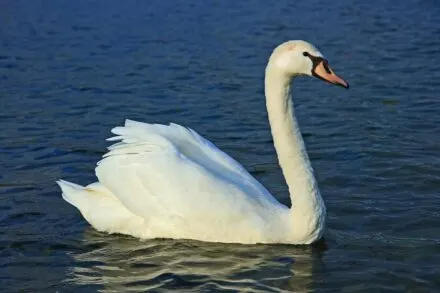
Mute swan
About the species
A large white waterbird that nests by slow waters, reservoirs and ponds with vegetation.
 Bird
Great crested grebe
About the species
A diving waterbird with a crest on its head. Hunts small fish and insects, nests on a floating nest in the reeds.
 Wildlife
Dragonflies
About the species
Predatory insect. The larvae live underwater for several months to years; adult dragonflies hunt in the air above the water.
 Wildlife
Green frogs (water frogs)
About the species
A group of green frogs that sit by the bank and jump into the water when disturbed.
 Wildlife
Common toad
About the species
The largest native toad. In spring it migrates to water, where it breeds.
 Wildlife
Raccoon dog
About the species
A canid from East Asia that has spread across Europe and is invasive. Near water it hunts for frogs, fish, bird eggs and molluscs.
 Wildlife
Grass snake
About the species
A harmless snake with two yellow spots on the nape. It swims well and hunts frogs, fish and newts.
 Wildlife
Eurasian otter
About the species
It hunts fish, crayfish and frogs. It is strictly protected, and its presence is considered a sign of fairly clean water with plenty of fish.
 Wildlife
Mayflies
About the species
An insect with aquatic larvae. Adults live only briefly and hatch all at once in swarms.
 Plant
Common reed
About the species
Tall grass that forms extensive reed beds around ponds and on banks.
 Invasive plant
Himalayan balsam
About the species
An invasive plant from the Himalayas, up to two metres tall, with pink flowers. It overgrows the banks of watercourses.
 Plant
Black alder
About the species
A riparian tree whose roots reach below the water surface.
 Plant
Yellow flag iris
About the species
A tall wetland plant with yellow flowers that grows on damp banks.
 Plant
Common duckweed
About the species
A tiny floating plant that can cover the whole surface of standing water.
 Invasive plant
Japanese knotweed
About the species
An invasive herb from East Asia that forms dense stands up to three metres tall.
 Risk
Wild boar
How to protect yourself
It comes to the water to wallow and drink, mainly at dusk and at night.
How to protect yourself: A wild boar sow with piglets can be aggressive. Keep your distance, do not spend the night on a game trail and do not leave food scraps near the water.
 Risk
Adder
How to protect yourself
A venomous snake that basks on rocky slopes, in wetlands and at forest edges near water.
How to protect yourself: It is shy and bites only when threatened. On rocky banks do not reach with your hand between the stones, and wear sturdy footwear. After a bite stay calm, do not move the affected limb and call 112.
 Risk
Grey wolf
How to protect yourself
A shy predator of the forests. It comes to the water at night and at dusk.
How to protect yourself: Attacks on people are very rare. Keep your camp tidy, do not feed wildlife and keep your dog on a lead.
 Risk
Sheep tick
How to protect yourself
Transmits tick-borne encephalitis and Lyme disease. It waits in tall grass and in the vegetation along banks.
How to protect yourself: From spring to autumn check yourself after fishing, use repellent and tuck long trousers into your socks. Remove a tick as soon as possible with tweezers. Vaccination against tick-borne encephalitis is available.
Wildlife, plants and hazards: records come from observations and also reflect where observers move around; they are not density measurements or a guarantee of an encounter. They apply to the surroundings of about 35 × 55 km.
Photo credits
- Black-headed gull: Photo: Hans Hillewaert, CC BY-SA 3.0, Wikimedia Commons
- Mallard: Photo: This picture was realized by Richard Bartz by using a Canon EF 70-300mm f/4-5.6 IS USM…, CC BY-SA 2.5, Wikimedia Commons
- Great cormorant: Photo: MPF, CC BY-SA 4.0, Wikimedia Commons
- Mute swan: Photo: Sanchezn, CC BY-SA 3.0, Wikimedia Commons
- Great crested grebe: Photo: JJ Harrison (https://www.jjharrison.com.au/), CC BY-SA 3.0, Wikimedia Commons
- Dragonflies: Photo: Paul Balfe, CC BY 2.0, Wikimedia Commons
- Green frogs (water frogs): Photo: Charles J. Sharp, CC BY-SA 4.0, Wikimedia Commons
- Common toad: Photo: Tythatguy1312, CC BY-SA 4.0, Wikimedia Commons
- Raccoon dog: Photo: Ryzhkov Sergey, CC BY-SA 4.0, Wikimedia Commons
- Grass snake: Photo: Charles J. Sharp, CC BY-SA 4.0, Wikimedia Commons
- Eurasian otter: Photo: Bernard Landgraf, CC BY-SA 3.0, Wikimedia Commons
- Mayflies: Photo: Richard Bartz, Munich aka Makro Freak Image:MFB.jpg, CC BY-SA 2.5, Wikimedia Commons
- Common reed: Photo: W.carter, CC0, Wikimedia Commons
- Himalayan balsam: Photo: H. Zell, CC BY-SA 3.0, Wikimedia Commons
- Black alder: Photo: AnRo0002, CC0, Wikimedia Commons
- Yellow flag iris: Photo: Myrabella, CC BY-SA 3.0, Wikimedia Commons
- Common duckweed: Photo: author not stated, CC BY-SA 3.0, Wikimedia Commons
- Japanese knotweed: Photo: W.carter, CC0, Wikimedia Commons
- Wild boar: Photo: Valentin Panzirsch, CC BY-SA 3.0 at, Wikimedia Commons
- Adder: Photo: Charles J. Sharp, CC BY-SA 4.0, Wikimedia Commons
- Grey wolf: Photo: User:Mas3cf, CC BY-SA 4.0, Wikimedia Commons
- Sheep tick: Photo: W.alter, CC BY-SA 4.0, Wikimedia Commons
Other fishing districts nearby
Fishing districts on the same watercourse and the nearest fishing districts in the river basinFishing districts9
Other fishing districts on the watercourse Radew: 3. Nearest fishing districts around Obwód rybacki rzeki Radew – nr 3: 6.
Other fishing districts around Obwód rybacki rzeki Radew – nr 3
On the same stream and nearest in the basin
On the Radew stream
- Still water
Obwód rybacki jeziora Drzewiany II w zlewni rzeki Radew – nr 1
- Still water
Obwód rybacki jeziora (zbiornika zaporowego) Rosnowo na rzece Radew – nr 1
- Still water
Obwód rybacki zbiornika Bardzlino na rzece Radew – nr 2
Nearest in the basin
Still water
Obwód rybacki jeziora Rybackie na cieku bez nazwy uchodzącym do rzeki Parsęta nr – 1
- Flowing water
Obwód rybacki rzeki Parsęta – nr 1
Still water
Obwód rybacki jeziora Parnowskie (Parnowo) na rzece Czerwona -nr 1
- Flowing water
Obwód rybacki rzeki Czerwona – nr 2
Still water
Obwód rybacki jeziora Kamienica (Kamnica) na rzece Błotnica – nr 1
Still water
Obwód rybacki jeziora Wielin (Wielińskie, Wielino) na rzece Wielinka – nr 1